- Today On AI
- Posts
- Waymo is testing Gemini as an in-car AI assistant in its robotaxis
Waymo is testing Gemini as an in-car AI assistant in its robotaxis
AND: OpenAI is looking for a new Head of Preparedness

Danish Anwar
December 29, 2025

✨TodayOnAI’s Daily Drop
Waymo is testing Gemini as an in-car AI assistant in its robotaxis
OpenAI is looking for a new Head of Preparedness
Nvidia Taps Groq Talent in $20B Chip Licensing Deal
💬 Let’s Fix This Prompt
🧰 Today’s AI Toolbox Pick
| 📌 The TodayOnAI Brief |
Waymo

🚀 TodayOnAI Insight: Waymo is quietly testing the integration of Google’s Gemini AI chatbot into its robotaxis, aiming to create a context-aware in-car assistant that enhances the rider experience with helpful, real-time responses and basic vehicle control.
🔍 Key Takeaways:
Gemini’s unreleased integration, revealed by Jane Manchun Wong, includes a 1,200+ line "Ride Assistant Meta-Prompt" outlining behavior and capabilities.
The assistant is designed to answer questions, control cabin functions like temperature and music, and offer friendly, context-aware support.
Gemini avoids technical jargon, maintains a clear separation from Waymo’s driving system, and deflects questions about competitors or driving incidents.
Features it can’t control (like windows or seat position) are met with “aspirational” responses (“It’s not something I can do yet”).
Unlike Tesla’s Grok, which focuses on open-ended conversation, Gemini is optimized for brevity, reassurance, and functional support during rides.
💡 Why This Stands Out: Waymo’s move hints at a broader trend: embedding AI companions not as novelty chatbots, but as carefully scoped, purpose-driven interfaces for real-world systems. The meticulous prompt design shows how seriously Alphabet is taking trust, tone, and role definition in autonomous mobility. As AI assistants evolve, will pragmatism win over personality in public-facing use cases?
OPENAI
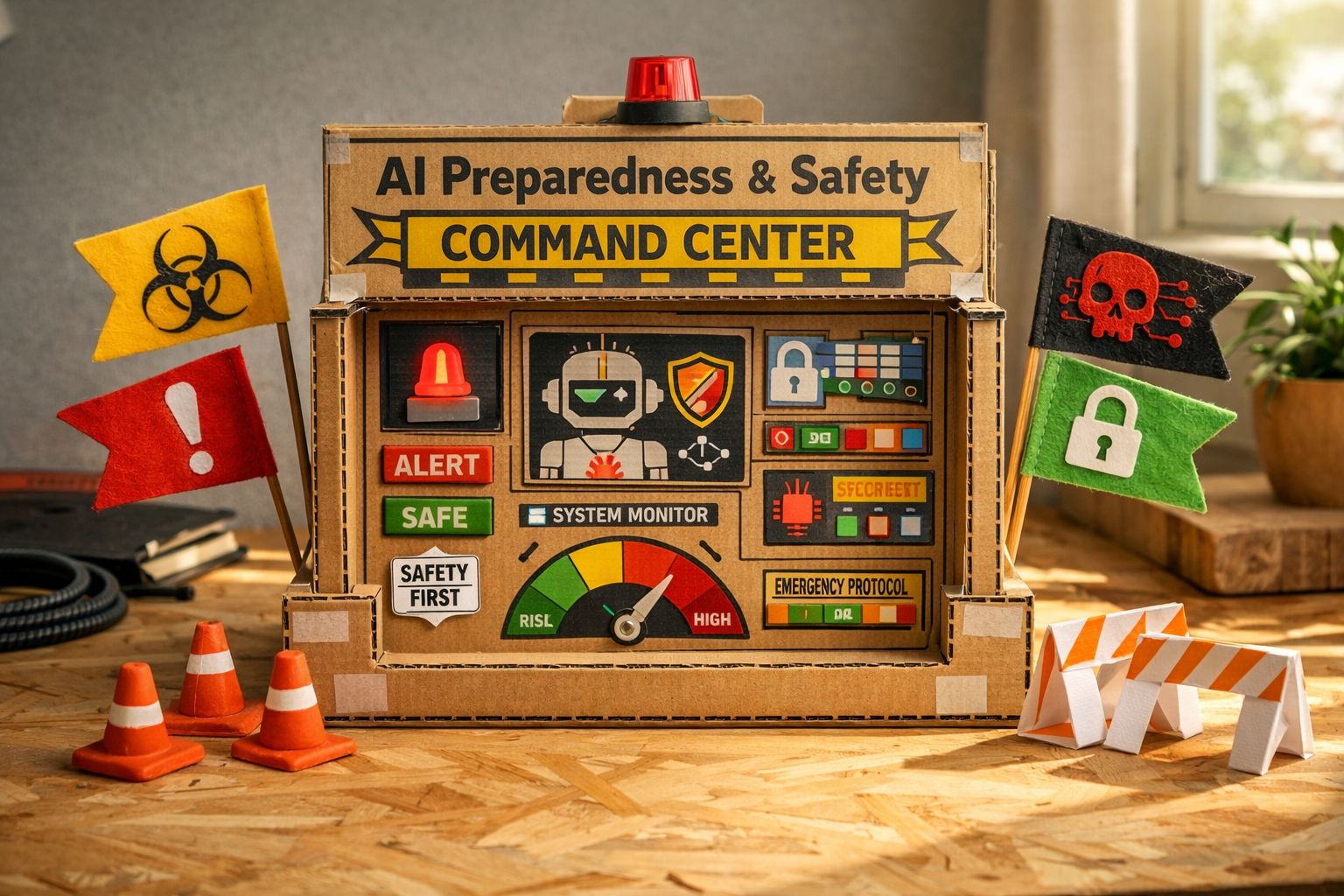
🚀 TodayOnAI Insight: OpenAI is hiring a Head of Preparedness to lead its efforts in assessing emerging AI threats—from advanced cybersecurity exploits to mental health risks—signaling a sharper organizational focus on frontier safety challenges.
🔍 Key Takeaways:
OpenAI’s new executive role centers on executing its Preparedness Framework, a strategy to identify and mitigate catastrophic risks from advanced AI.
The position offers $555,000 in base salary plus equity and spans domains like biosecurity, self-improving systems, and misuse prevention.
CEO Sam Altman noted that models are already finding real vulnerabilities in computer systems and potentially affecting users’ mental health.
The original preparedness team, formed in 2023, has seen leadership reshuffles, including the reassignment of former lead Aleksander Madry.
OpenAI now reserves the right to adjust its safety posture in response to how rival labs handle high-risk model releases.
💡 Why This Stands Out: This move reflects growing pressure on AI leaders to proactively manage not just speculative existential risks but present-day harms—from exploits to emotional fallout. OpenAI’s evolving safety posture suggests a shift from theoretical oversight to real-world triage. Can any single framework keep pace with both technical acceleration and societal impact?
Nvidia
🚀 TodayOnAI Insight: Nvidia has entered a licensing deal with Groq and hired key members of its leadership, including founder Jonathan Ross. While Nvidia denies acquiring the company outright, reports suggest the $20B asset purchase could mark its largest deal to date—potentially reshaping the AI chip race.
🔍 Key Takeaways:
Nvidia signed a non-exclusive licensing agreement with Groq, an AI chip startup known for its ultra-efficient LPUs (language processing units).
As part of the deal, Nvidia will hire Groq founder Jonathan Ross, president Sunny Madra, and other staff.
CNBC reports a $20 billion valuation for the transaction—if accurate, it would be Nvidia’s largest ever. Nvidia has not confirmed the scope.
Groq claims its LPUs run LLMs 10x faster and at one-tenth the energy compared to GPUs.
Groq raised $750M in September at a $6.9B valuation and now powers AI applications for over 2 million developers.
💡 Why This Stands Out: This move signals Nvidia’s strategic interest in expanding beyond GPUs as the demand for AI-specific chips accelerates. Groq’s LPU architecture offers a radically different path to scaling LLMs, and bringing its leadership in-house could give Nvidia a powerful edge in next-gen inference. Is Nvidia hedging against future disruption—or quietly shaping it?
| 💬 Let’s Fix This Prompt |
✨ See how a simple prompt upgrade can unlock better AI output.
🔹 The Original Prompt
"Generate blog ideas for a tech company."
At first glance, this prompt might seem okay. But it's too broad — and that limits the quality of AI-generated results. Let’s improve it using prompt engineering best practices.
✅ The Improved Prompt
Generate a list of unique, engaging blog post ideas for a B2B tech company that wants to attract decision-makers in mid-sized companies. Focus on topics related to emerging technology trends, industry insights, and practical solutions their software offers. Include suggested titles and a 1–2 sentence summary for each idea.
💡 Why It's Better
Specific audience: Targets decision-makers in mid-sized companies.
Contextual focus: Emphasizes emerging tech and practical solutions.
Actionable output: Requests summaries and titles to spark execution.
Tone and style: Guides the type of content (insightful, engaging, relevant).
🛠️ Learn how to adapt this prompt for SaaS, AI tools, dev teams & more →
Read the full PromptPilot breakdown
💡 Bonus Tool: Want to generate and master prompts instantly?
👉 Try PromptPilot by TodayOnAI (Free to use)
| 🧠 Smart Picks |
📰 More from the AI World
🧰 Today’s AI Toolbox Pick
📆Date Planner (Dating Tool): Brainstorms unique, personalized dates to help you stand out and reduce anxiety.
📱Tapasom (Content Tool): An innovative platform that unites influencers, creators, and brands to create a fusion of influence and impact.
🌌Jeda.ai (Whiteboard Tool): The world’s first all-in-one AI visual workspace.