- Today On AI
- Posts
- Picsart now allows creators to ‘hire’ AI assistants through agent marketplace
Picsart now allows creators to ‘hire’ AI assistants through agent marketplace
AND: Memories AI is building the visual memory layer for wearables and robotics

Danish Anwar
March 17, 2026

✨TodayOnAI’s Daily Drop
Picsart now allows creators to ‘hire’ AI assistants through agent marketplace
Memories AI is building the visual memory layer for wearables and robotics
ByteDance reportedly pauses global launch of its Seedance 2.0 video generator
💬 Let’s Fix This Prompt
🧰 Today’s AI Toolbox Pick
| 📌 The TodayOnAI Brief |
Picsart

🚀 TodayOnAI Insight: Picsart is launching an AI agent marketplace, letting creators delegate design and e-commerce tasks to specialized assistants—marking a shift from hands-on editing to AI-managed workflows.
🔍 Key Takeaways:
Introduces four launch agents—Flair, Resize Pro, Remix, and Swap—each targeting specific creative or commercial tasks
Flair integrates with Shopify, analyzing store data to suggest edits, improve visuals, and soon run A/B tests
Resize Pro uses generative AI to intelligently expand content for multi-platform formats without awkward cropping
Agents can operate via WhatsApp and Telegram, enabling asynchronous, chat-based workflow management
Users control “autonomy levels,” requiring approval before agents execute actions to reduce risks like hallucinations
💡 Why This Stands Out: Picsart isn’t just adding AI features—it’s restructuring how creative work gets done. By shifting users from execution to oversight, it aligns with a broader industry move toward agent-driven productivity. The real signal: creative tools are becoming orchestration layers for AI labor. If this model sticks, creators may spend less time designing—and more time directing.
Memories ai
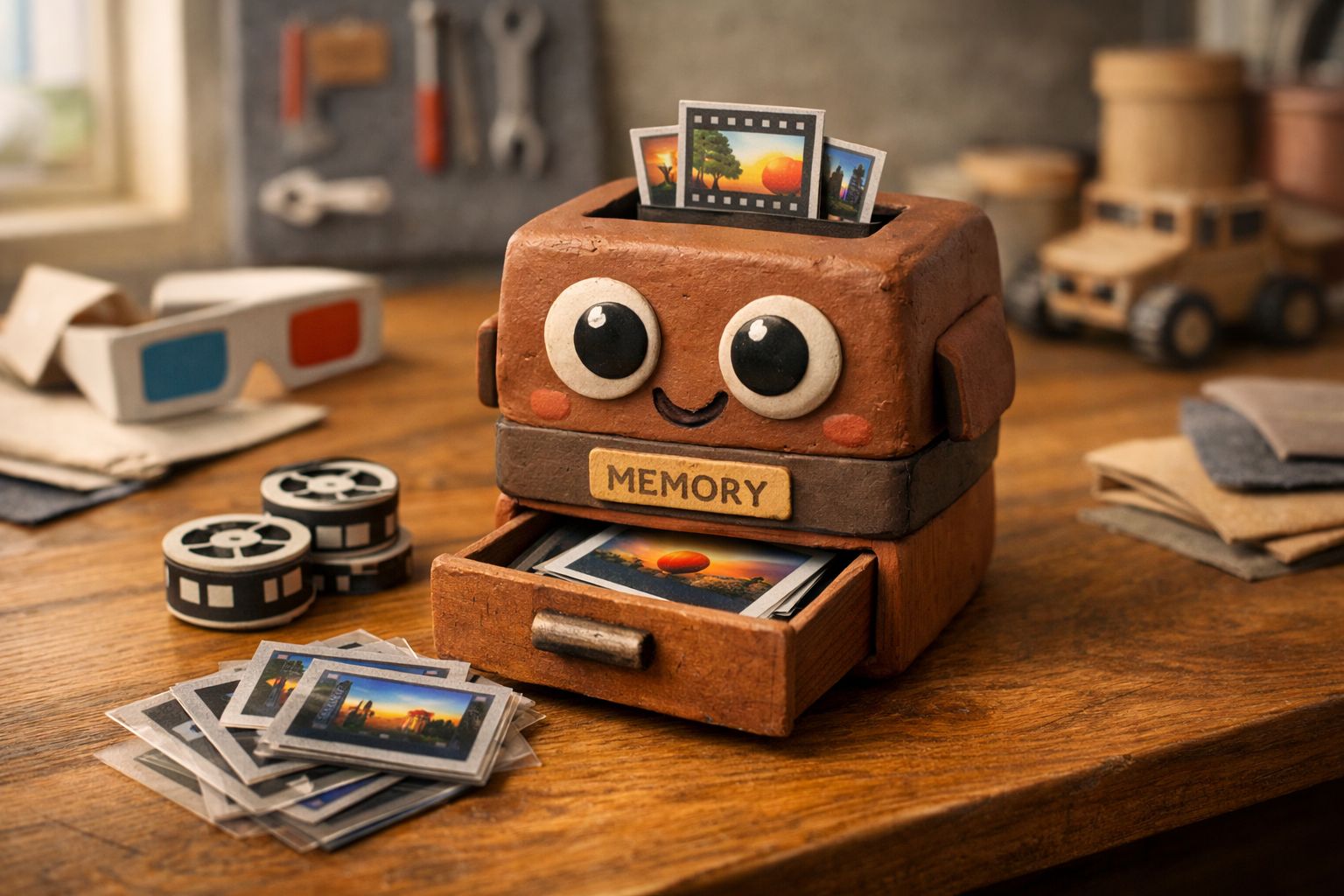
🚀 TodayOnAI Insight: Memories.ai is betting that AI’s next leap hinges on visual memory—partnering with Nvidia to give wearables and robots the ability to “remember” what they see, not just what they’re told.
🔍 Key Takeaways:
Memories.ai announced a partnership with Nvidia, leveraging Cosmos-Reason 2 and Metropolis for visual reasoning and video indexing
The startup is building a “large visual memory model” (LVMM) to store and retrieve video-based experiences
Founded by ex-Meta engineers behind Ray-Ban smart glasses, the idea emerged from a key limitation: users couldn’t meaningfully recall recorded footage
Unlike text-based memory (used by OpenAI, Google, xAI), this system focuses on unstructured visual data for real-world AI
Raised $16M and partnered with Qualcomm, with early traction in wearables and robotics
💡 Why This Stands Out: AI memory is evolving from text logs to sensory recall—a shift that could define physical-world intelligence. If machines can reliably “remember” visual context, it unlocks more autonomous robotics and useful wearables. The real question: will visual memory become as foundational as language models are today?
ByteDance

🚀 TodayOnAI Insight: ByteDance has reportedly paused the global launch of Seedance 2.0, its viral AI video model, after Hollywood studios pushed back over clips that appeared to use recognizable talent and major entertainment IP. The delay shows how quickly legal pressure is becoming a real product constraint for generative video companies.
🔍 Key Takeaways:
Seedance 2.0 launched in China in February and quickly gained attention for polished short-form AI video generation.
Viral demo clips, including one showing Tom Cruise fighting Brad Pitt, triggered sharp criticism from the film industry.
Studios reportedly sent cease-and-desist letters, with Disney accusing ByteDance of misusing protected intellectual property.
ByteDance said it would strengthen IP safeguards, but its planned mid-March global rollout is now on hold.
The pause reflects growing tension between model capability, viral distribution, and legal defensibility.
💡 Why This Stands Out: Generative video is moving from novelty to legal flashpoint. ByteDance’s delay suggests that for AI media tools, product readiness now depends as much on rights management as model quality. The real question is no longer whether these systems can create convincing video—it’s whether they can do so without pulling the industry into constant litigation.
| 💬 Let’s Fix This Prompt |
✨ See how a simple prompt upgrade can unlock better AI output.
🔹 The Original Prompt
"Generate blog ideas for a tech company."
At first glance, this prompt might seem okay. But it's too broad — and that limits the quality of AI-generated results. Let’s improve it using prompt engineering best practices.
✅ The Improved Prompt
Generate a list of unique, engaging blog post ideas for a B2B tech company that wants to attract decision-makers in mid-sized companies. Focus on topics related to emerging technology trends, industry insights, and practical solutions their software offers. Include suggested titles and a 1–2 sentence summary for each idea.
💡 Why It's Better
Specific audience: Targets decision-makers in mid-sized companies.
Contextual focus: Emphasizes emerging tech and practical solutions.
Actionable output: Requests summaries and titles to spark execution.
Tone and style: Guides the type of content (insightful, engaging, relevant).
🛠️ Learn how to adapt this prompt for SaaS, AI tools, dev teams & more →
Read the full PromptPilot breakdown
💡 Bonus Tool: Want to generate and master prompts instantly?
👉 Try PromptPilot by TodayOnAI (Free to use)
| 🧠 Smart Picks |
📰 More from the AI World
Copilot Makes Discovering Ideas Feel Like a Conversation
Vevo & Arc Institute Release 300M-Cell Atlas to Advance Drug Discovery with AI
Meta Launches Aria Gen 2 to Power the Future of Perception & Contextual AI.
Talk to Perplexity: Real-Time Voice Answers Now on iOS
🧰 Today’s AI Toolbox Pick
🍋LemonSqueezy (Finance Tool): Handles the tax compliance burden so you can focus on more revenue with less headache.
💻ZipWP (Web Design Tool): Creates stunning websites in seconds.
⚙️DupDub (Content Tool): An all-in-one content creation platform that allows you to craft your content effortlessly and streamline your workflow.